

"Science progresses one funeral at a time."
— Max Planck (paraphrased)
Science & Academia
When quality control prevents quality. When skepticism becomes dogma. When the system for producing knowledge blocks knowledge.
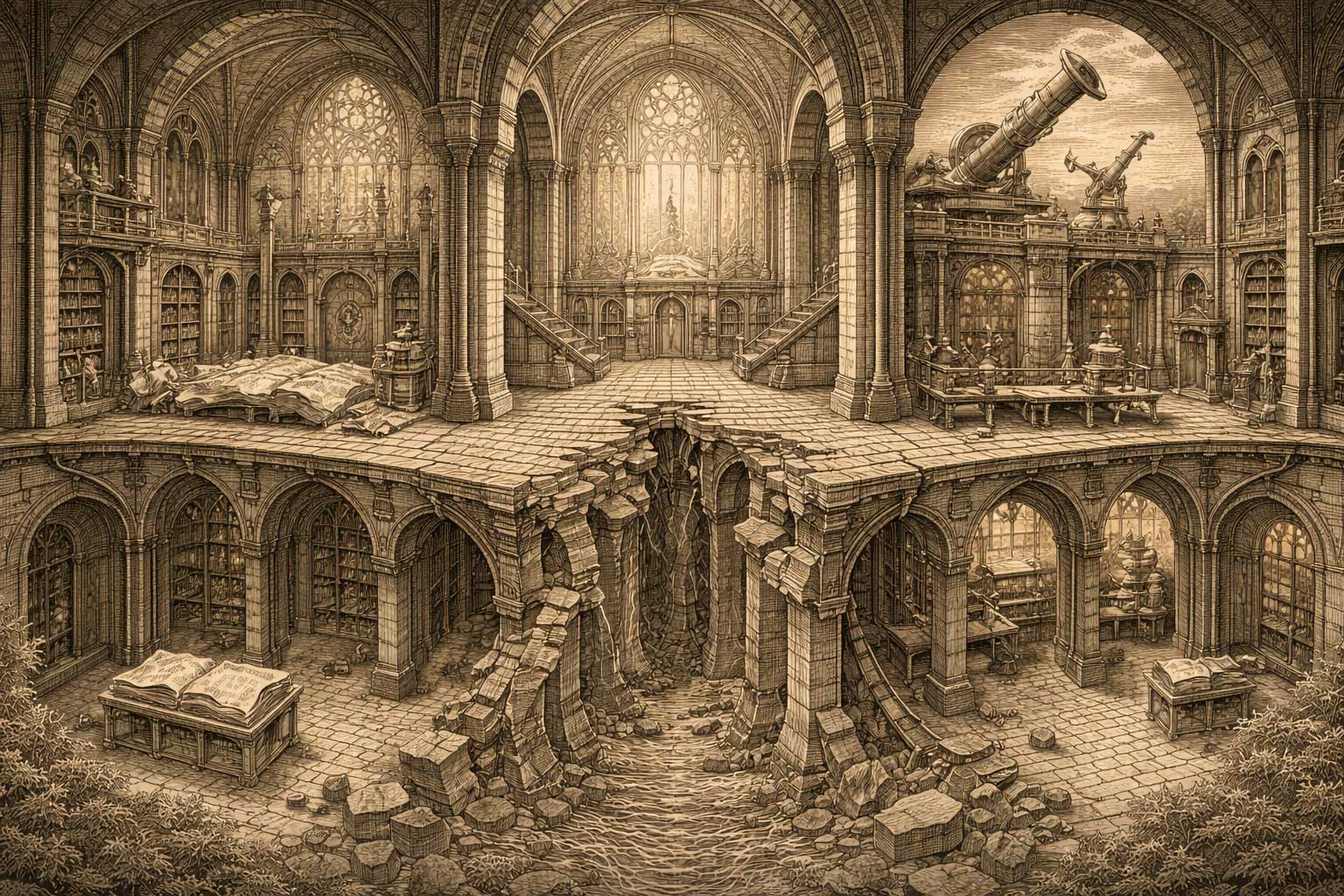
Galileo's Paradox
The structure:
The Church developed rigorous methods for evaluating truth claims—Scripture, tradition, theological consensus. These methods worked for centuries. Galileo presents evidence contradicting established cosmology. The evidence is empirical. The method is theological. The system cannot accept the evidence without invalidating the method that defines the system.
Why each actor is rational:
- Church authorities: Defend established epistemology (their mandate)
- Theologians: Apply proven methods (centuries of tradition)
- Galileo: Presents empirical evidence (scientific method)
- Aristotelians: Defend coherent philosophical framework (not stupid, just different paradigm)
Why it fails collectively:
The Church's rationality (defend doctrinal authority) and Galileo's rationality (follow empirical evidence) are incompatible within the same system. Accepting Galileo means invalidating the Church's claim to arbitrate truth. Rejecting Galileo means ignoring evidence. Both choices destroy something essential.
The trap: The system designed to preserve truth cannot recognize new truth without destroying itself.
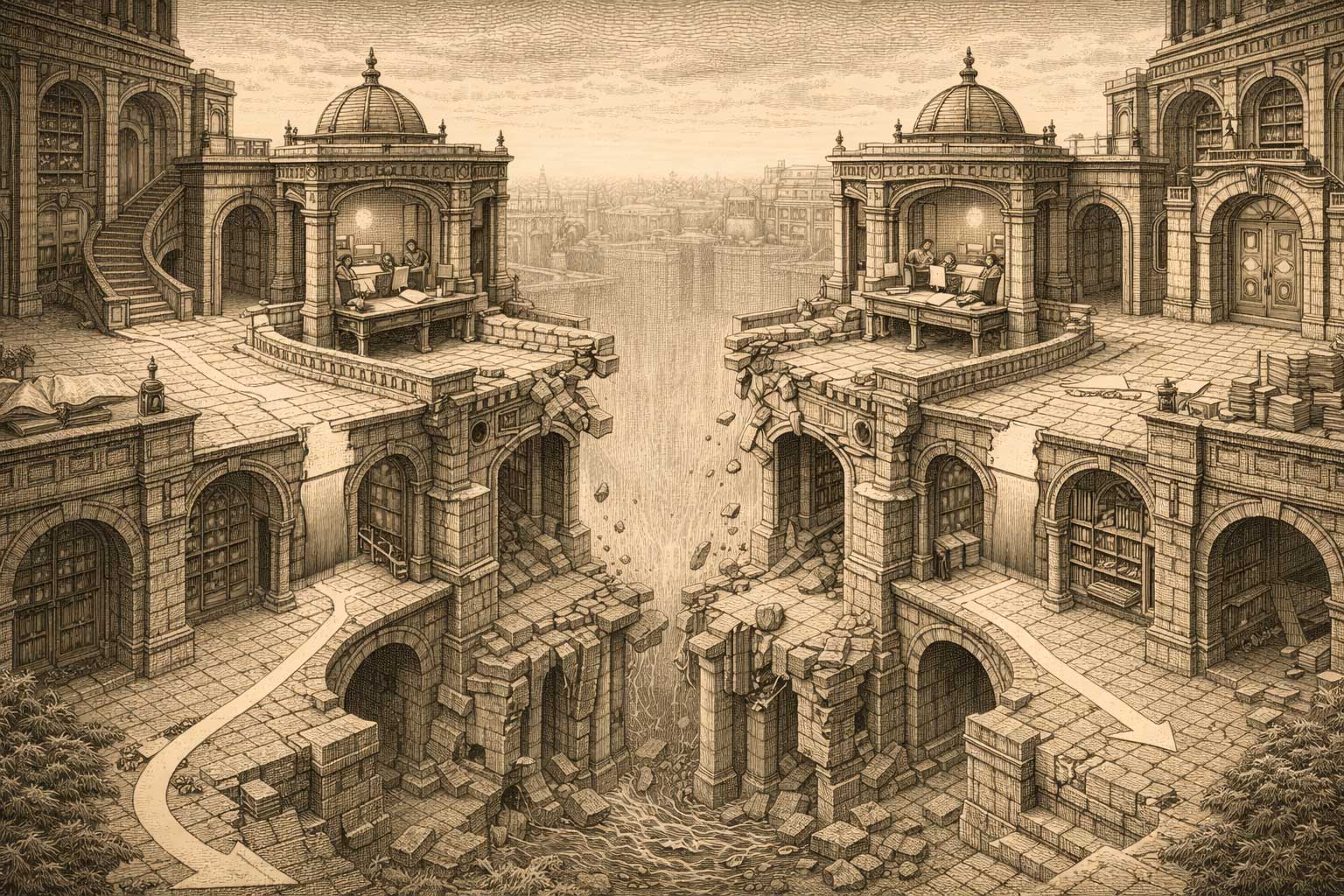
Peer Review Gatekeeping
The structure:
Journals use peer review to ensure quality. Reviewers are experts in the field. Experts have established positions, frameworks, careers built on current paradigms. Submissions challenging those paradigms get reviewed by people invested in their validity. Radical ideas fail review not because they're wrong, but because they're too different.
Why each actor is rational:
- Journals: Want credible content (reputation matters)
- Reviewers: Apply field standards (that's expertise)
- Editors: Trust expert judgment (who else can evaluate?)
- Established researchers: Defend frameworks that work (not malicious, protective)
- Funding bodies: Support peer-reviewed research (where else to allocate?)
Why it fails collectively:
The system optimizes for incremental advances within accepted paradigms. Paradigm shifts—by definition—violate current standards. Gatekeepers aren't biased, they're competent. Their competence is the problem.
The trap: Quality control becomes innovation control.

Publish or Perish
The structure:
Academia measures productivity by publication count. Researchers optimize for publications. More papers, smaller findings. Journals proliferate. Quality disperses. Reviewers get overwhelmed. Review quality drops. Bad papers get published. Trust in publications erodes. Pressure to publish increases (to stand out from noise). Cycle accelerates.
Why each actor is rational:
- Researchers: Publish to survive (career requirement)
- Universities: Measure output (how else to evaluate?)
- Journals: Publish more (revenue model)
- Reviewers: Skim papers (too many to read deeply)
- Administrators: Count publications (objective metric)
Why it fails collectively:
Incentivizing quantity destroys quality. Everyone knows this. No one can stop. The researcher who publishes less gets denied tenure. The journal that rejects more gets fewer submissions. The university that changes metrics loses rankings.
The trap: The measure of success prevents success.

Replication Crisis
The structure:
Science rewards novel findings. Journals publish positive results. Null results go unpublished (not interesting). Researchers run studies, find nothing, file it away. Someone else runs similar study, finds nothing, files it away. Eventually someone gets a false positive (statistics guarantee this). That gets published. No one publishes the twenty null results. Literature shows "effect exists." It doesn't.
Why each actor is rational:
- Researchers: Publish novel findings (that's how you get funded)
- Journals: Publish interesting results (that's what readers want)
- Funders: Support promising research (not "we found nothing")
- Media: Report on breakthroughs (null results aren't news)
- Universities: Promote successful findings (PR value)
Why it fails collectively:
Publication bias creates false consensus. The system selects for false positives. Replication fails, but failures don't get published (still not interesting). The structure produces unreliable knowledge while everyone follows the rules.
The trap: The system for discovering truth produces falsehood.

Academic Specialization
The structure:
Knowledge expands. Researchers specialize to contribute meaningfully. Specialization deepens. Subfields fragment. Specialists can't communicate across subfield boundaries. Interdisciplinary problems (climate, AI, public health) require integration. No one has the breadth. Generalists lack depth. Specialists lack context.
Why each actor is rational:
- Researchers: Specialize to be competitive (depth wins grants)
- Departments: Hire specialists (measurable expertise)
- Conferences: Organize by subfield (coherent discussions)
- Journals: Focus on niches (clearer scope)
- Students: Train narrowly (employability)
Why it fails collectively:
Real problems don't respect disciplinary boundaries. The structure that produces expertise prevents synthesis. Specialists solve narrow problems brilliantly. Big problems remain unsolved—not because solutions are unknown, but because no one can integrate the pieces.
The trap: Depth of knowledge creates blindness.
More examples in this category coming soon.