

"The war will be over by Christmas."
— Every war, every side, every time
"Wars begin with enthusiasm and end in depletion."
— Peter Senner
War & Conflict
When rational actors produce slaughter. When stopping becomes betrayal. When the structure demands blood to justify blood.
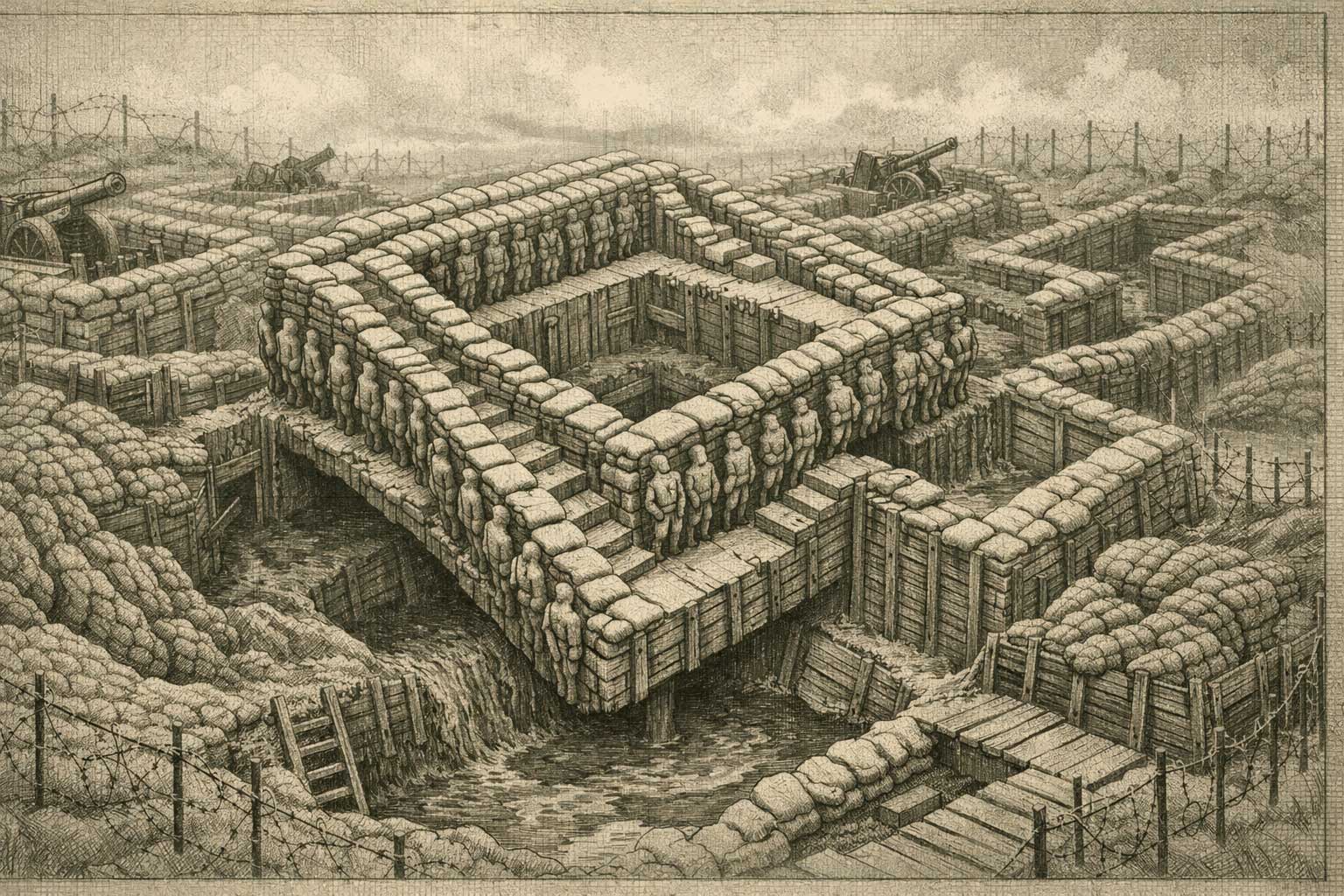
Losses Justify Losses
The Structure
War begins (reasons vary, often rational at the time). Losses occur. These losses must have meaning. Therefore: continue fighting. More losses. Previous losses plus new losses must have meaning. Therefore: continue fighting. Until depletion. Then peace (not from insight, from collapse).
Why Each Actor Is Rational
- Soldiers: Do their duty. Comrades died, can't let them die for nothing
- Generals: Strategy invested, must show success
- Politicians: Political capital committed, resignation if defeated
- Population: Sons lost, need meaning in sacrifice
- Economy: War economy running, peace means costly restructuring
Why It Collectively Fails
Each loss becomes justification for the next. The only way out: run out of everything.
Not wisdom. Depletion.
Historical Examples
- WWI Verdun (1916): 700,000 casualties, zero strategic gain. Continued because stopping would make previous losses meaningless.
- WWI Somme (1916): First day: 57,000 British casualties. Campaign continued five months. Why? Losses already sustained.
- Vietnam: Escalation justified by previous losses. "Can't let them die in vain." More die. Repeat.
- Afghanistan (all participants): 20 years. Every year justified by previous investment.
The Trap
Stopping means admitting: All those deaths were pointless. That's unbearable. So continue. Until defeat or depletion forces admission.
The structure doesn't break from insight. It breaks from depletion.
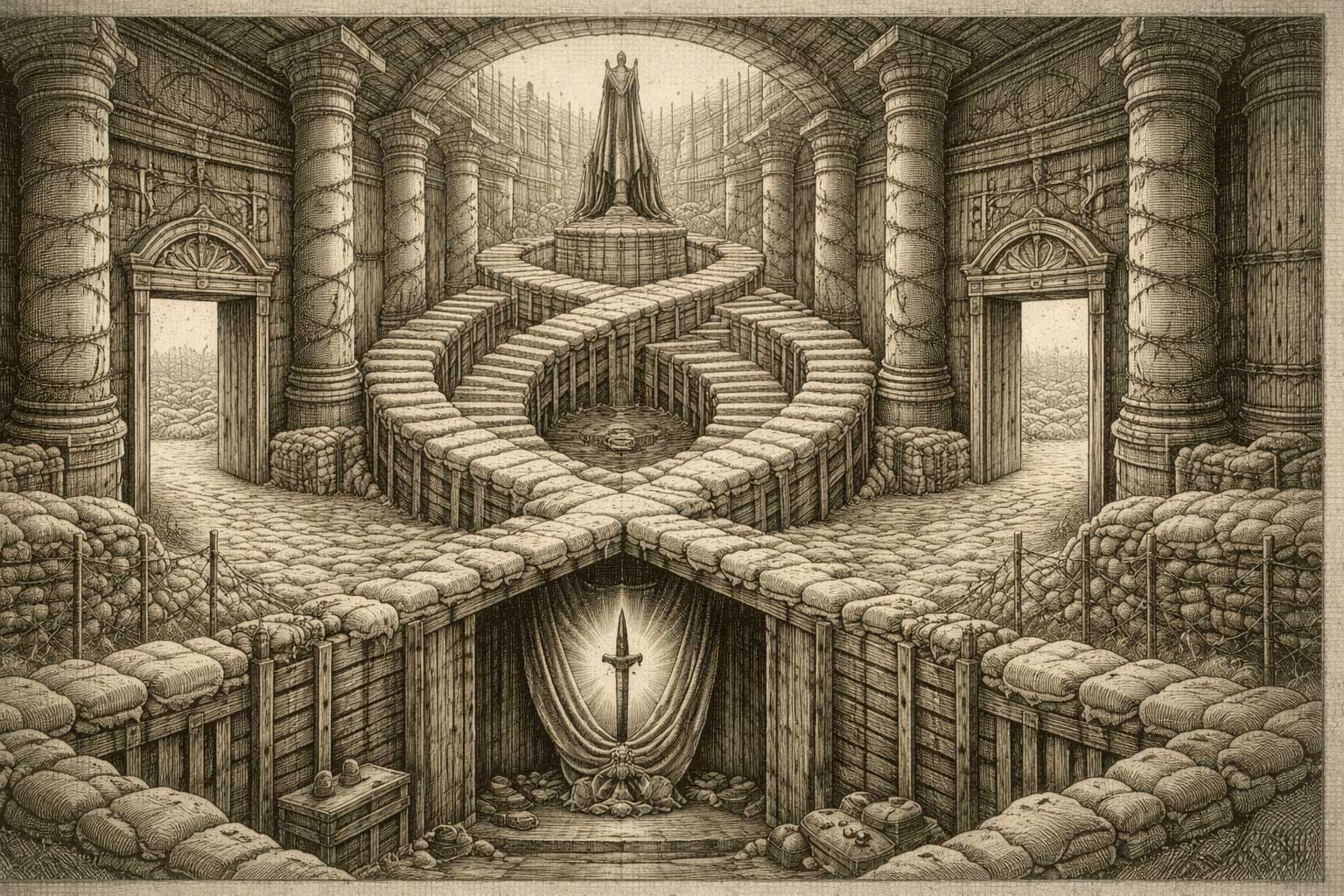
The Peacemaker as Traitor
The Logic
Someone proposes peace (surrender, armistice, negotiation). This prevents "victory." Victory would justify losses. Peace without victory = losses were meaningless. Therefore: peacemaker is traitor.
The Dolchstoßlegende (Stab-in-the-Back Myth)
Germany, November 1918. War ending. Army "undefeated in the field" (not true, but believed).
Armistice signed. War ends.
Question: Why did we lose if we were winning?
Answer: Betrayal. Traitors at home. Jews, socialists, November criminals.
The myth: We would have won, but internal enemies betrayed us.
Why This Is Structural
The losses demand meaning. Military defeat provides no meaning (we failed). Betrayal provides meaning (we were stabbed in the back).
The narrative protects collective identity. We didn't fail. We were sabotaged.
Consequences
The myth generates the next war. "This time, without traitors."
Germany 1933-1945: The direct continuation. Eliminate the "traitors." Fight the war "properly."
Result: Total destruction. Because the structure now demands total commitment.
The Pattern Repeats
- Post-Vietnam: "We weren't allowed to win" (politicians, media blamed)
- Post-Afghanistan: Various blame narratives
- Every "lost cause": Generates betrayal myth
The structure protects itself by externalizing failure. Then reproduces through revenge.
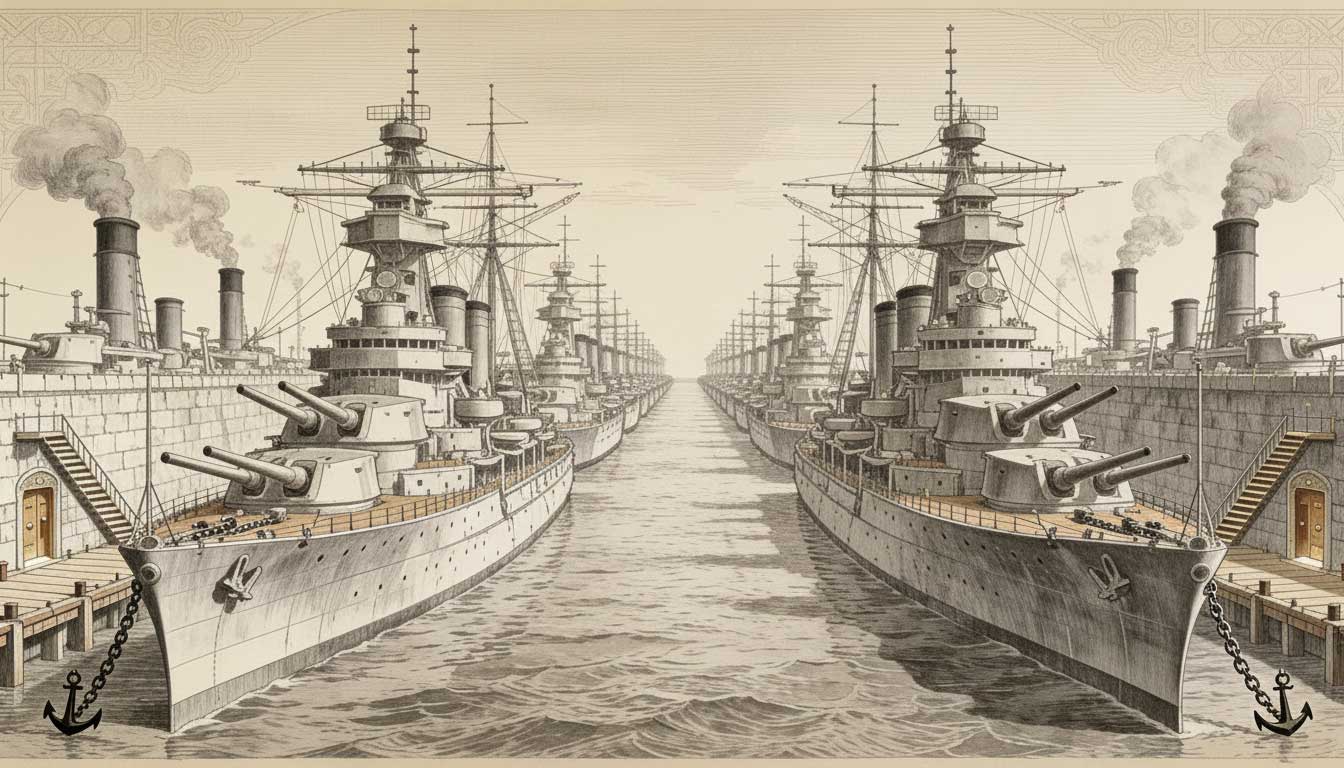
The Tirpitz Paradox
The Setup
Kaiser Wilhelm II. Obsessed with naval power. Builds massive fleet (Tirpitzplan).
Goal: Match Britain. Gain respect. Project power.
Result: Britain perceives threat. Naval arms race. Escalation.
Contributing factor to WWI.
The Irony
WWI begins. German fleet... stays in port.
Why? Too valuable to risk. Britain's Royal Navy superior. One major battle (Jutland, 1916) - tactical draw, strategic British victory. Fleet returns to port. Sits. Waits.
The fleet that helped cause the war doesn't fight the war.
The Final Twist
November 1918. War ending. German High Command orders fleet to sea. Suicide mission. Restore honor.
Sailors refuse. Mutiny. Kiel, November 3, 1918.
Mutiny spreads. Becomes revolution. Kaiser abdicates November 9.
War ends.
The Complete PI Structure
- Tirpitz fleet helps cause war (arms race, British hostility)
- Fleet doesn't fight (too valuable, strategically useless against superior force)
- Fleet ends war (mutiny triggers collapse)
- Fleet blamed for "betrayal" (Dolchstoßlegende)
Wilhelm's pet project - his favorite child - becomes the scapegoat for defeat.
Why Each Actor Was Rational
- Wilhelm: Build fleet for prestige, power projection
- Tirpitz: Execute policy, create naval force
- Naval command: Preserve fleet (too valuable to lose)
- Sailors: Refuse suicide mission (pointless death)
- Population: Need scapegoat (can't accept military defeat)
All rational. All contributed to catastrophe.
The Lesson
The structure that causes the problem becomes the structure that "betrays." The system eats its own children. Rational at every step.
All are guilty. None are at fault.
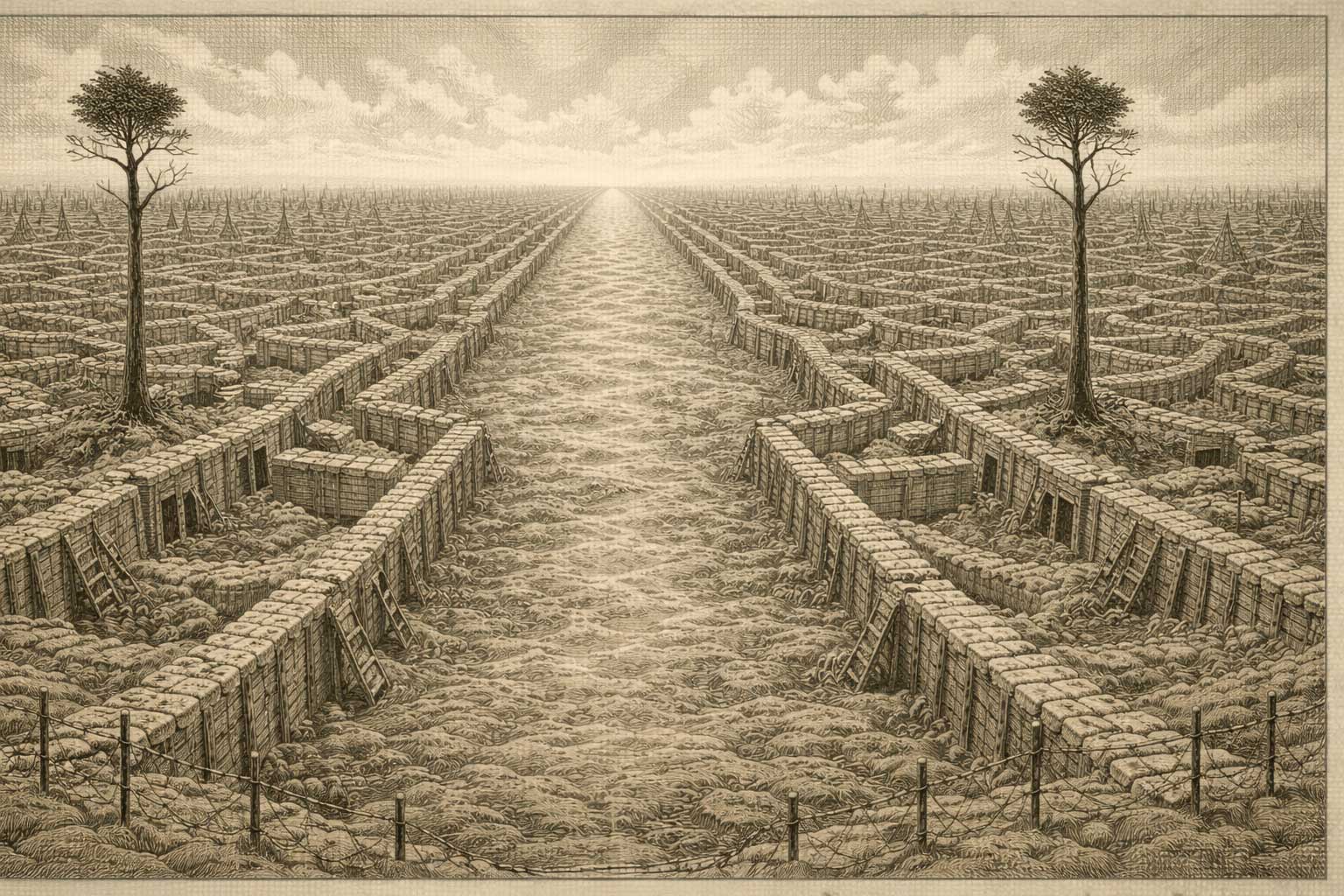
Why Wars Don't End Sooner
The Question
Everyone knows WWI is slaughter. By 1916, it's clear: stalemate. No victory possible.
Why continue?
The Answer
Stopping requires admitting: Previous losses were for nothing.
Plus: The other side was right. We were wrong. Morally, strategically, existentially.
That's double unbearable.
Politicians can't admit that (would lose power). Generals can't admit that (would lose position). Soldiers can't accept that (comrades died for nothing). Population can't bear that (sons died for nothing - AND for the wrong cause).
The Structure
Each death becomes investment demanding return. More deaths = more investment. More investment = higher required return. Higher return = more impossible to achieve. More impossible = more desperate fighting.
Positive feedback loop. To death.
The Breaking Point
Not insight. Collapse.
When nothing remains to sacrifice. Then, and only then, peace.
The Next War Paradox
The Logic
War ends (depletion, defeat, negotiation). Betrayal myth emerges (Dolchstoß, politicians, restraints). Narrative: "We could have won, but..."
Next generation grows up with myth. Myth generates motivation: "Finish what they started. No traitors this time."
Next war begins. Even more total. Because lessons "learned" from previous "betrayal."
Historical Pattern
- Franco-Prussian War (1870-71) → French revanchism → WWI
- WWI (1914-18) → German Dolchstoß → WWII
- WWII (1939-45) → Various national myths → Cold War tensions
- Post-colonial conflicts → Endless cycles
The Trap
Wars generate myths that generate wars. The structure reproduces through memory. Each war "learns" from the previous one - how to fight more totally.
What Doesn't Work
"War is Hell" - Deterrence Through Horror
Doesn't work. Every generation thinks: "This time will be different. We're prepared. We're stronger. We won't be betrayed."
The horror is abstract until experienced. By then, too late - losses already invested.
"Peace Through Strength"
Arms races. Each side builds to deter. Each side perceives threat. Escalation. War.
Wilhelm learned nothing. Every nation repeats it. Currently: Nuclear arsenals, AI weapons race.
"This Time We've Learned"
Haven't. The structure hasn't changed. The lessons are tactical, not structural.
Better weapons don't prevent war. They make it more efficient.
"International Law / UN / Treaties"
Work until they don't. When stakes are high enough, structures override rules.
Laws are downstream of power. Power creates exceptions.
What Might Navigate
Don't Start
Obvious. Ignored. Because reasons to start seem rational at the time.
The decision to begin commits to the loss-justification cycle.
Stop Early
Requires admitting error while losses are "small." Structurally very difficult. Leaders who admit error lose position.
Accept Meaninglessness
The losses were meaningless. Always were. No amount of future losses will create meaning.
This is unbearable. Therefore: rare.
Exhaust First
Wars end from exhaustion. If you know this, maybe exhaust faster?
Problem: Accelerating exhaustion means accelerating loss. The structure resists.
Break the Cycle - Don't Generate Myths
After war: Don't create betrayal narratives. Accept defeat as structural, not personal.
Requires cultural maturity. Germany post-1945 managed this (partially). Took total destruction.
The Pattern Across Conflicts
What Repeats:
- Rational Escalation: Each decision makes sense at the time
- Sunk Cost Trap: Losses justify continued investment
- Betrayal Myths: Failure externalized to preserve identity
- Cyclical Reproduction: Myths generate next conflict
- Structural Inevitability: Without depletion, wars continue
The Recognition
War PIs don't indicate humans are irrational or evil. They indicate structures override individual rationality.
The soldiers aren't stupid. The generals aren't insane. The politicians aren't monsters.
They're rational actors in a structure that produces slaughter.
All are guilty. None are at fault.
That's the war paradox.
More examples in this category coming soon.